

On Friday, 9 October the Constitutional Court handed down judgement dismissing a demand by the South African Hunters and Game Conservation Association (SA Hunters) to remove animal wellbeing provisions from South Africa’s biodiversity legislation.
These provisions came into force in June 2023 following a process of public participation, which SA Hunters had contributed to, according to court papers.
NEMBA defines animal well-being as “the holistic circumstances and conditions of an animal, which are conducive to its physical, physiological, and mental health and quality of life, including the ability to cope with its environment.”
Blood Lions welcomes the Constitutional Court decision, which ensures that these provisions remain firmly in South African legislation. We commend the Court for recognising the importance of retaining animal wellbeing in South Africa’s environmental policy, allowing years of work already undertaken by conservation and animal protection organisations to secure wellbeing in conservation and wildlife management decision-making.
The Court found that SA Hunters had unreasonably delayed bringing its challenge to court for 13 months following the provisions coming into force and that their interests were too closely linked to its members’ interests, which is narrower than the broad public’s interests. The Court’s final decision dismissed the application and SA Hunters was ordered to pay costs to the NSPCA and the EMS Foundation, who both intervened by opposing the challenge.
The judgement reinforces a vital principle that animal wellbeing must be considered in decisions on how wild animals are treated when managed, conserved, and/or used.
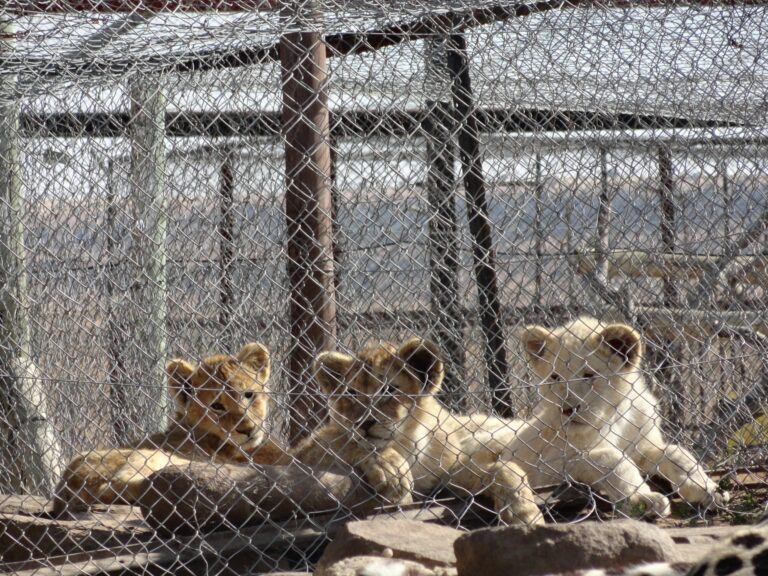
This is particularly significant for South Africa’s commercial captive predator industry, which breeds, keeps and uses predators for commercial purposes. Now, the commodification of captive lions and other predators can no longer be considered through an economic or private use lens alone. The inclusion of wellbeing requires consideration of the animal’s physical and mental health, quality of life and ability to cope with their environment, in this exploitative industry.
Blood Lions’ research has contributed to a growing body of evidence that repeatedly highlights the welfare concerns associated with the commercial captive predator industry. Our most recent peer-reviewed research assessed 34 public-facing captive lion tourism venues in South Africa and found that no venue achieved a high welfare condition rating across the assessment framework.
The recognition of animal wellbeing in biodiversity legislation provides an important legal foundation for evidence-based scrutiny of this industry and to inform decisions that take account of the needs of animals. Importantly, it reinforces the need for the government to meaningfully incorporate animal wellbeing into the development, implementation and enforcement of wildlife policy and regulations.
The South African government now has an opportunity to build on this decision by securing wellbeing not only in policy but more importantly in practice, including the intended phase out of the commercial captive lion industry and addressing the commercial exploitation of all captive predators.
Blood Lions echoes the NSPCA’s statement that animal wellbeing now needs to be applied and enforced consistently and we urge the government to give meaningful effect to this legislation through clear policy, regulation and accountability on both a national and provincial level.
Watch the judgement (from 2:02:30): https://www.youtube.com/watch?v=4CmO1X4wKDU