South Africa is home to one of the world’s largest commercial captive lion industries, with nearly 8,000 lions kept in about 350 facilities across the country. Lions may be bred and commercially exploited in various ways at different stages of their lives. Cubs are used for petting and feeding experiences, adolescent lions for walking activities, and older animals for breeding and captive trophy hunting. Live lions are exported to zoos and entertainment parks and for breeding purposes, and their bones and other body parts enter the wildlife trade (legally or illegally) after death. These different uses create an interconnected commercial system in which individual lions are exploited for profit throughout their lifetime.
Why Study Animal Welfare Conditions?
For decades, animal welfare concerns have been documented across South Africa’s captive lion industry.
Lions are highly social, wide-ranging predators with complex behavioural, physical and environmental needs.
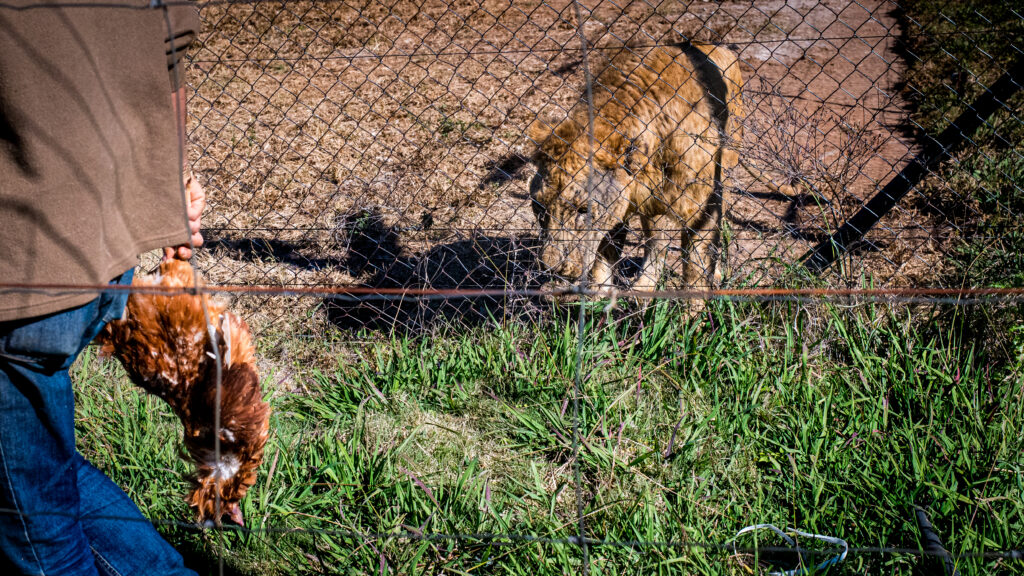
Captive environments limit the animal’s ability to exercise choice and control, and to perform behaviours that are important to their overall well-being.
Knowledge Gaps
NSPCA inspections repeatedly report on multiple animal welfare transgressions, which are supported by welfare research into lion cubs used in tourist interactions. However, systematic animal welfare evidence has been lacking.
Widespread Concerns Over Welfare Conditions
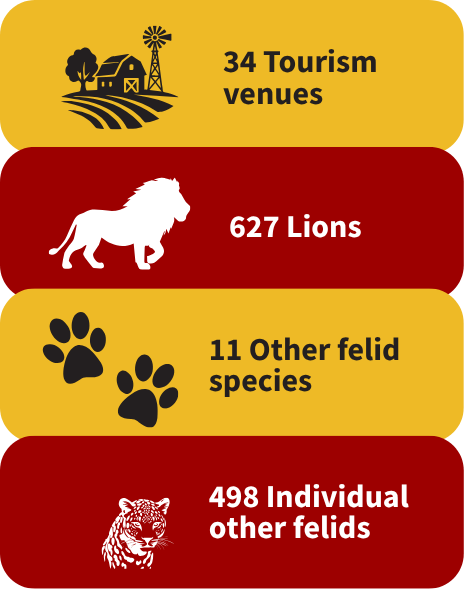
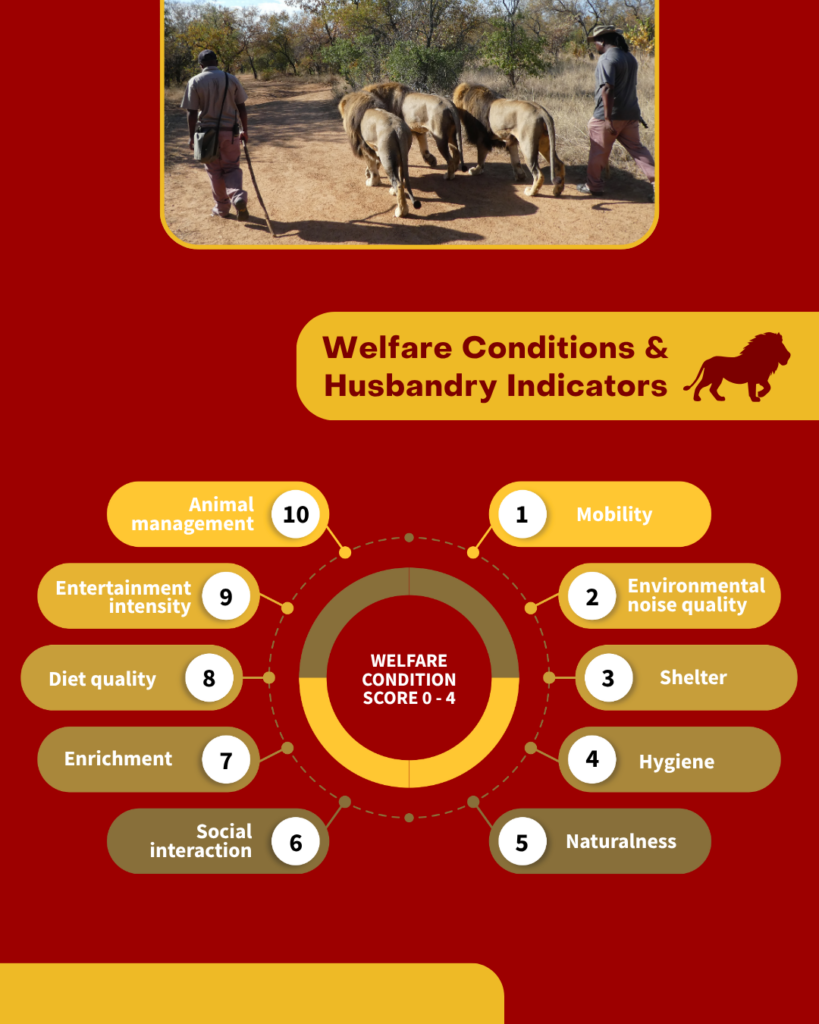
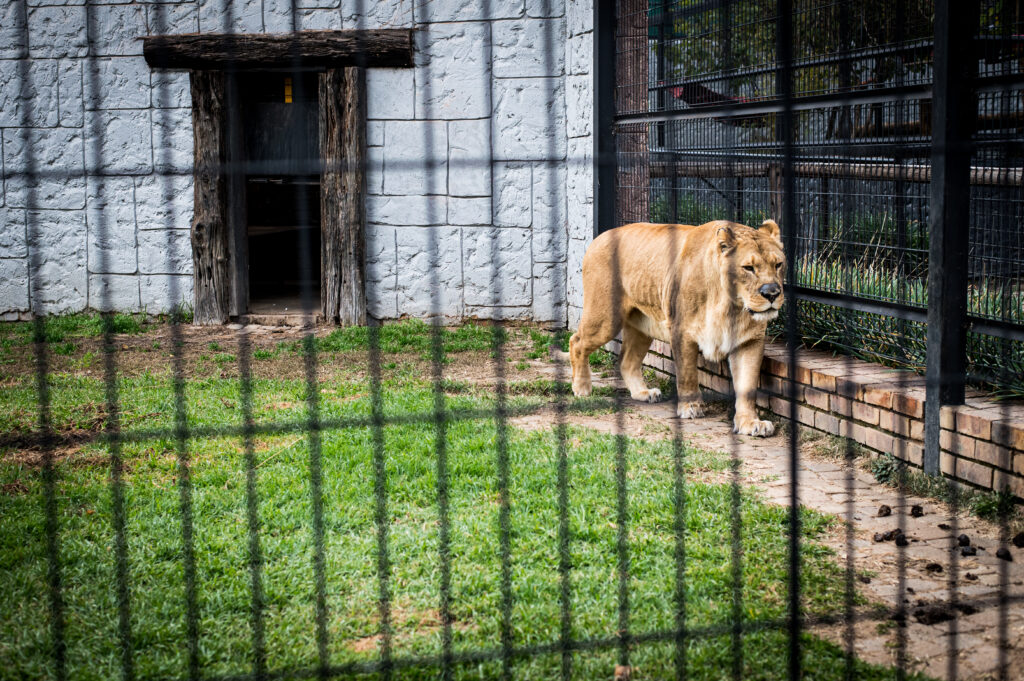
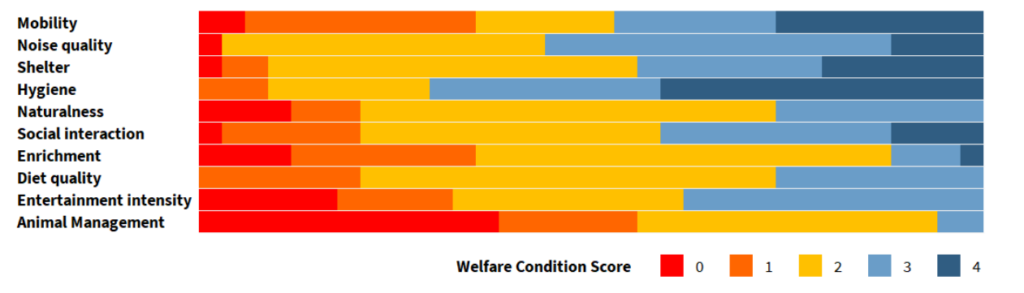
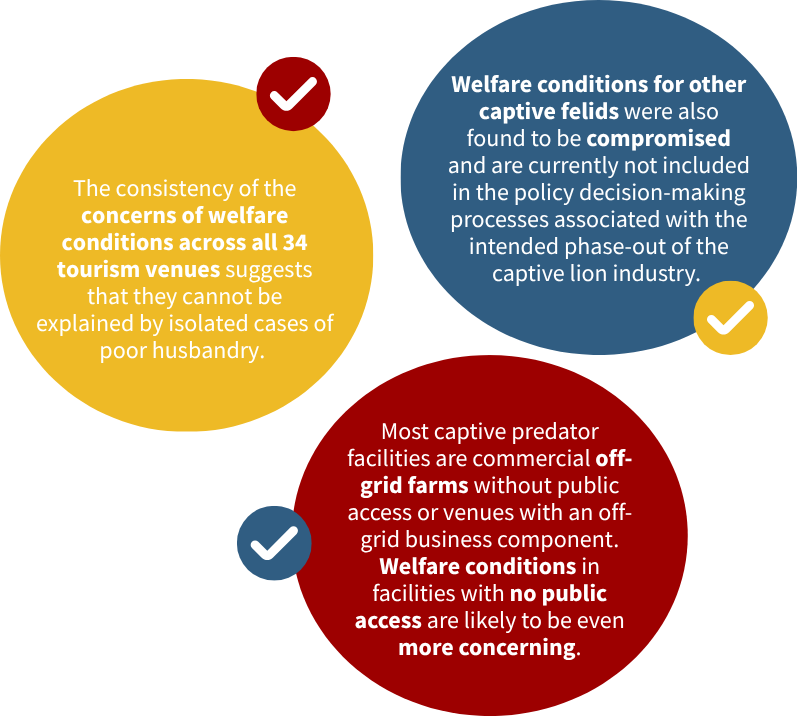
This investigation provides a systematic picture of welfare conditions across 34 public-facing captive lion venues in South Africa. The findings show welfare concerns across multiple aspects of the physical, environmental and behavioural conditions experienced by captive lions. The consistency of these concerns around animal welfare conditions across all venues suggests that they cannot be explained by isolated cases of poor husbandry. Rather they point to systemic welfare challenges embedded within the wider captive lion industry.
Welfare conditions inoff-grid facilities that keep lions and other predators for broader commercial purposes, like captive hunting, live export and trade in their body parts, are likely to be similar or potentially worse than those observed in these public-facing venues. When animals are kept within a system designed primarily around their commercial use, their management tends to be shaped by the needs of business and profit, rather than by what is best for the welfare of the animals under their control.
Animal-Visitor Interactions and Welfare Conditions
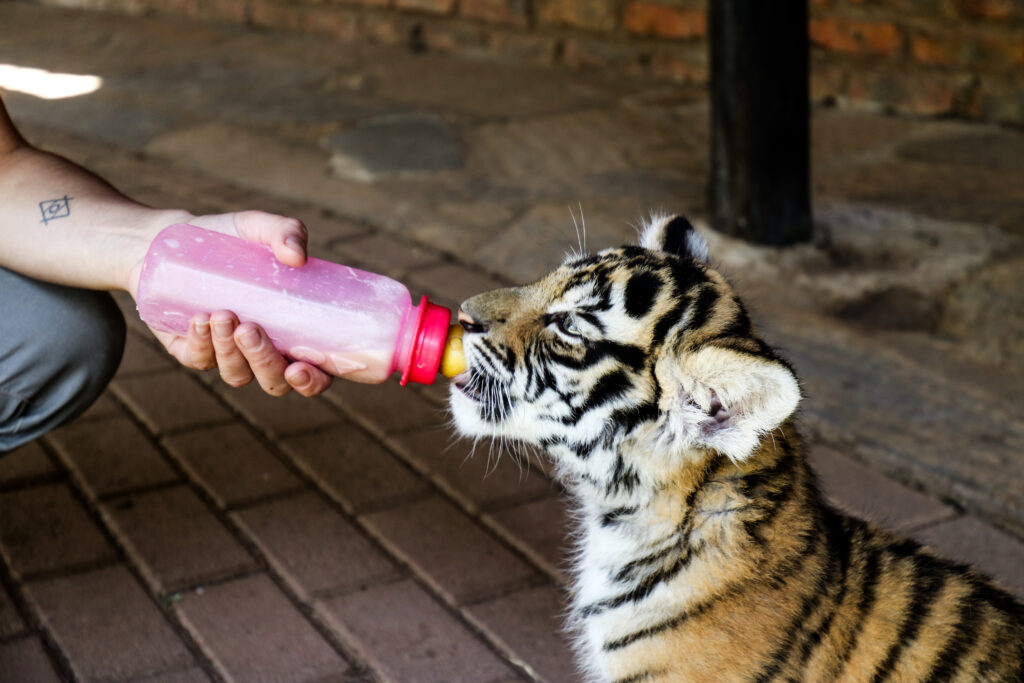
Two-thirds of the lion tourism venues offered some form of Animal-Visitor Interactions (AVI). Venues that did not offer AVI generally had better overall welfare conditions than venues offering activities, such as cub petting, bottle feeding, and walking with lions. The poorer welfare conditions associated with AVI extends beyond the interaction itself, as close-contact experiences generally require animals to be managed around the needs of tourists rather than their own needs.
Across the venues assessed, researchers observed very young cubs kept apart from their mothers, staged interactions with humans and inappropriate handling. Such practices can restrict opportunities for behavioural choice and species-typical behaviour. However, this does not mean that simply avoiding cub petting or walking with lions, and choosing a venue where lions are exhibited for viewing only is a guarantee of good welfare conditions. For tourists, the most wildlife-friendly choice is to avoid captive wild animals and instead choose to view wildlife in their natural habitats.
Other Indigenous and Exotic Predators
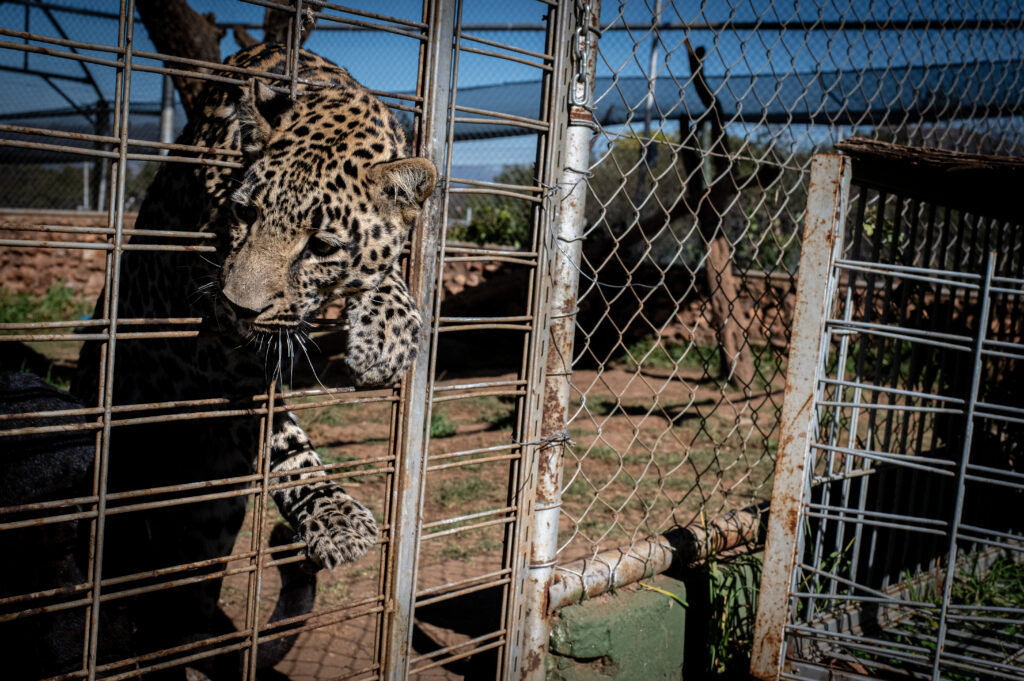
Almost 90% of the venues assessed also kept other mammals, including 11 different felid species. Tigers are particularly common, occurring at more than half of the venues, followed by servals, cheetahs, leopards and caracals. Welfare conditions for these wild cats were similar to those observed for lions. AVI activities were also common, with tiger cub interactions offered at a quarter of the venues, where a total of 69 tiger cubs were observed.
KEY TAKEAWAYS
HOW CAN YOU HELP?
We all have a role to play to reduce the demand for this industry by choosing not to visit venues that keep lions and other wild animals in captivity for entertainment. Encountering wildlife can be life-changing, but choose responsible and ethical alternatives that allow animals to live wild in their natural habitats.